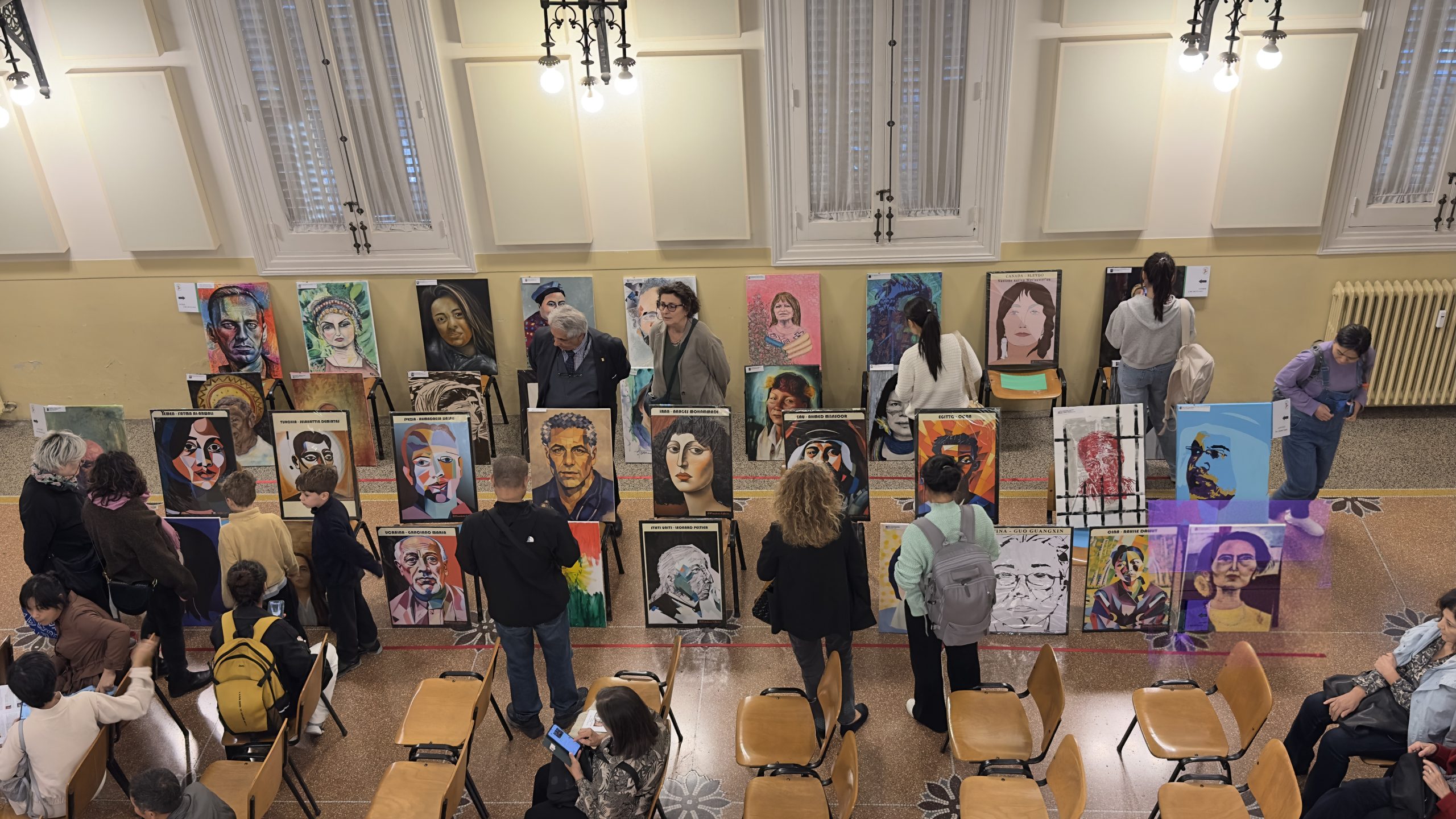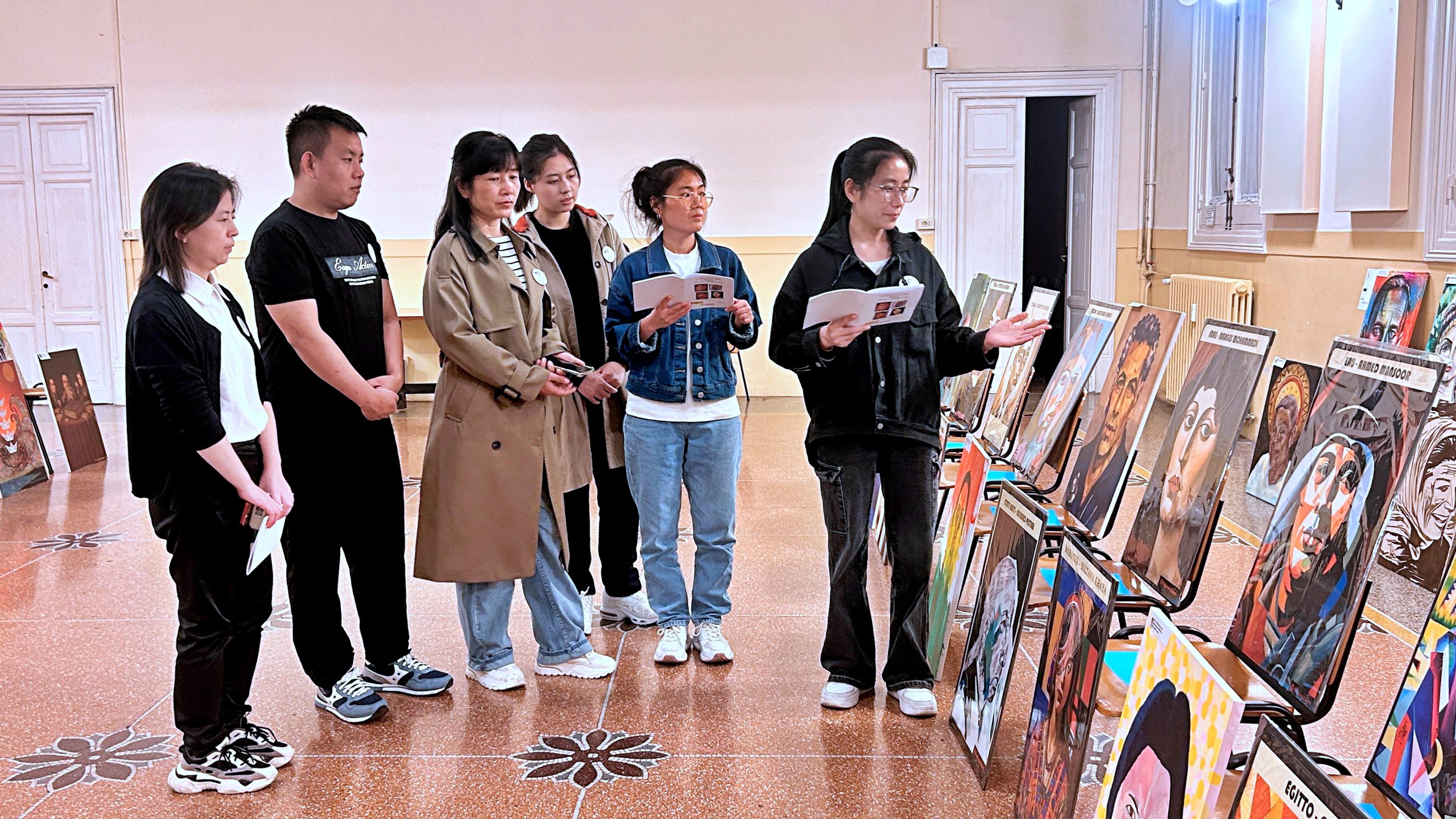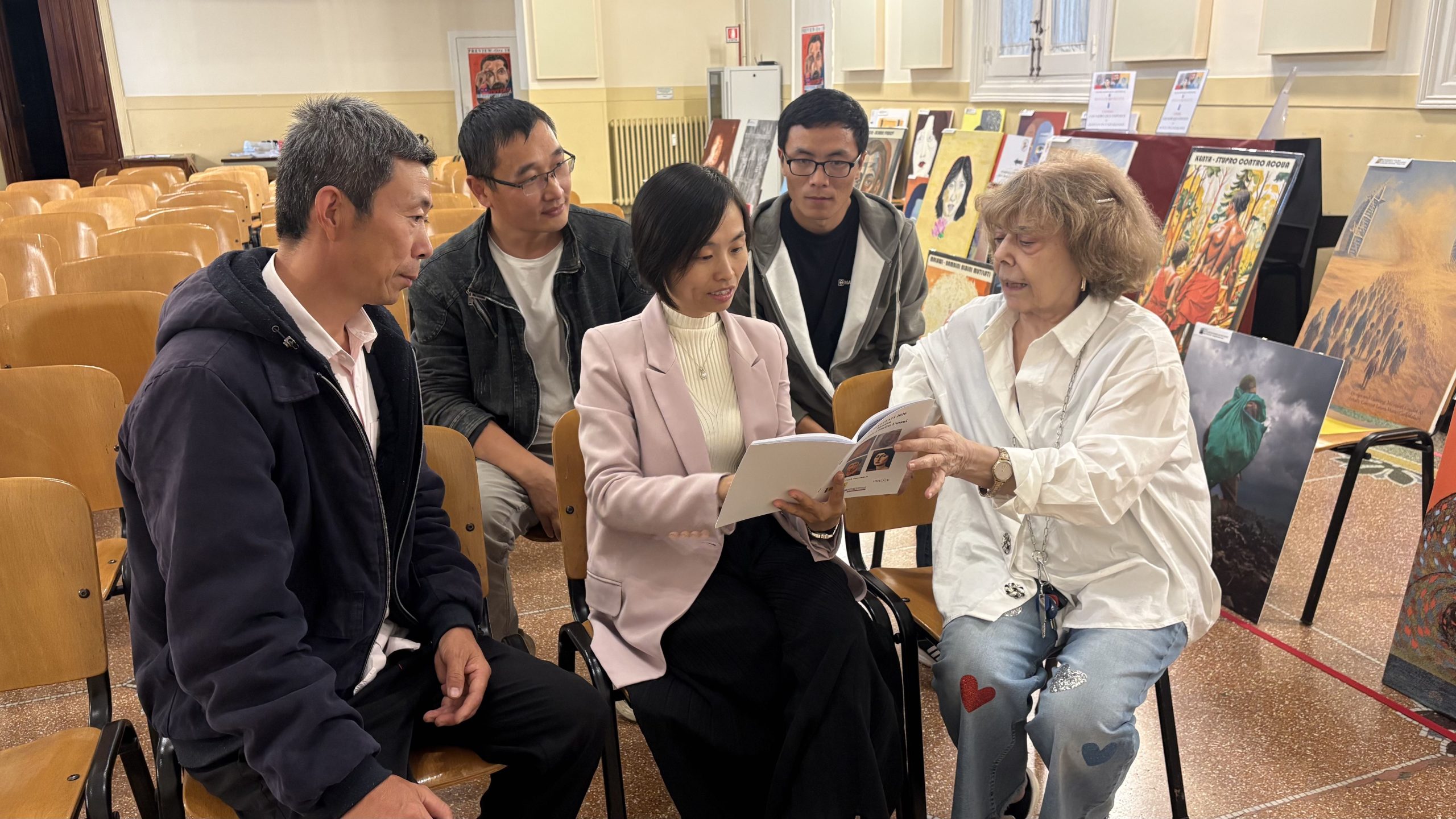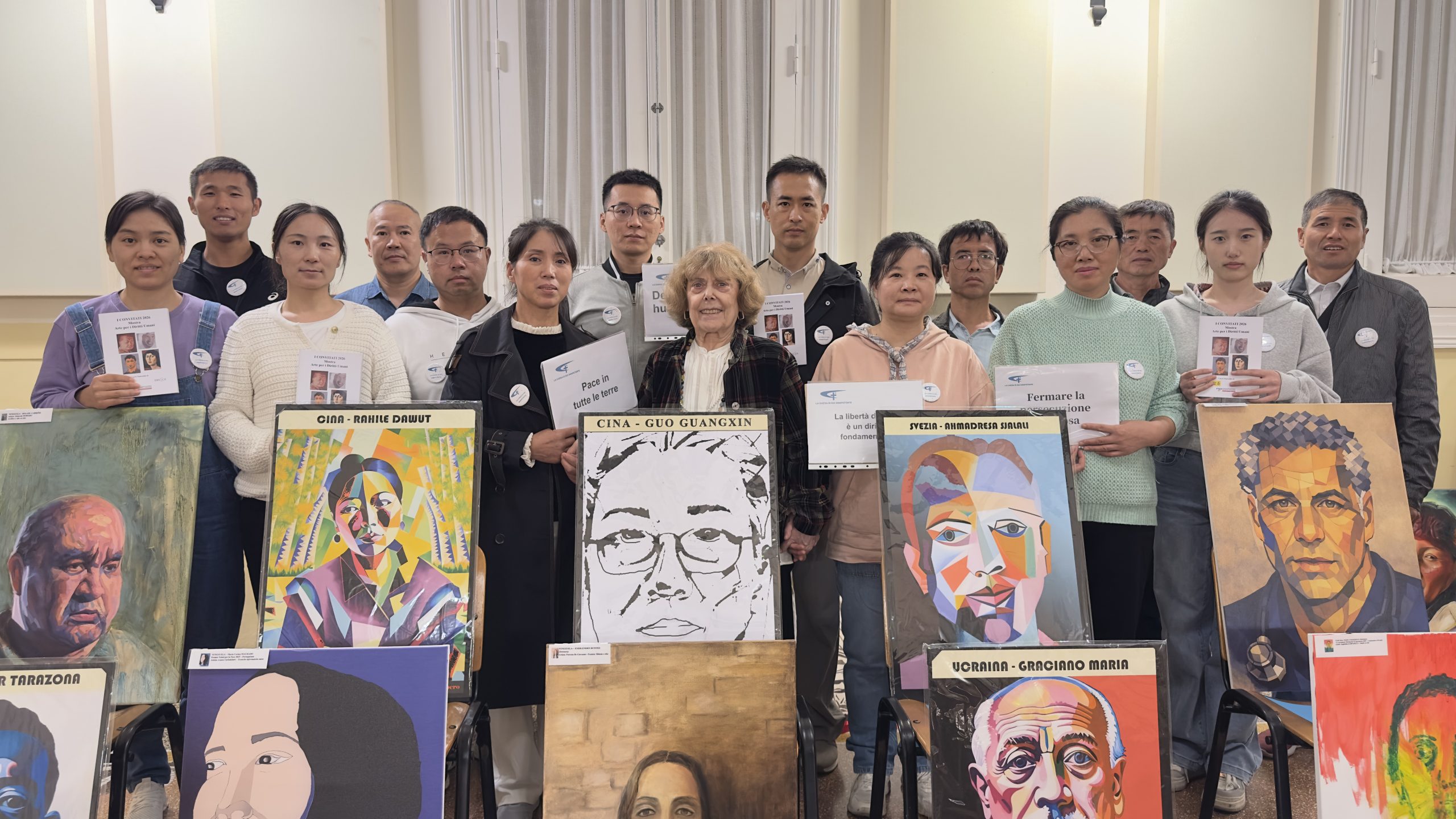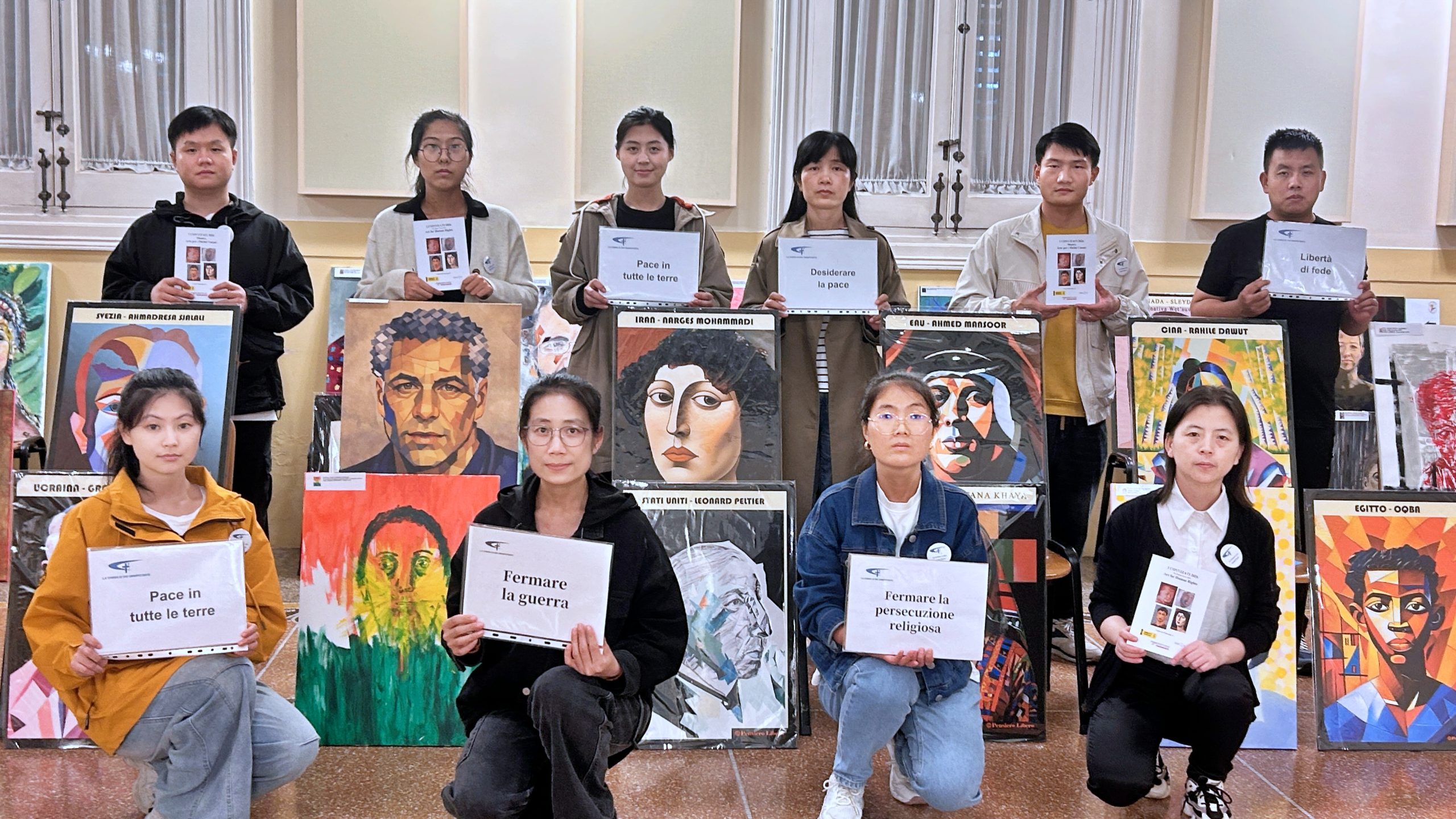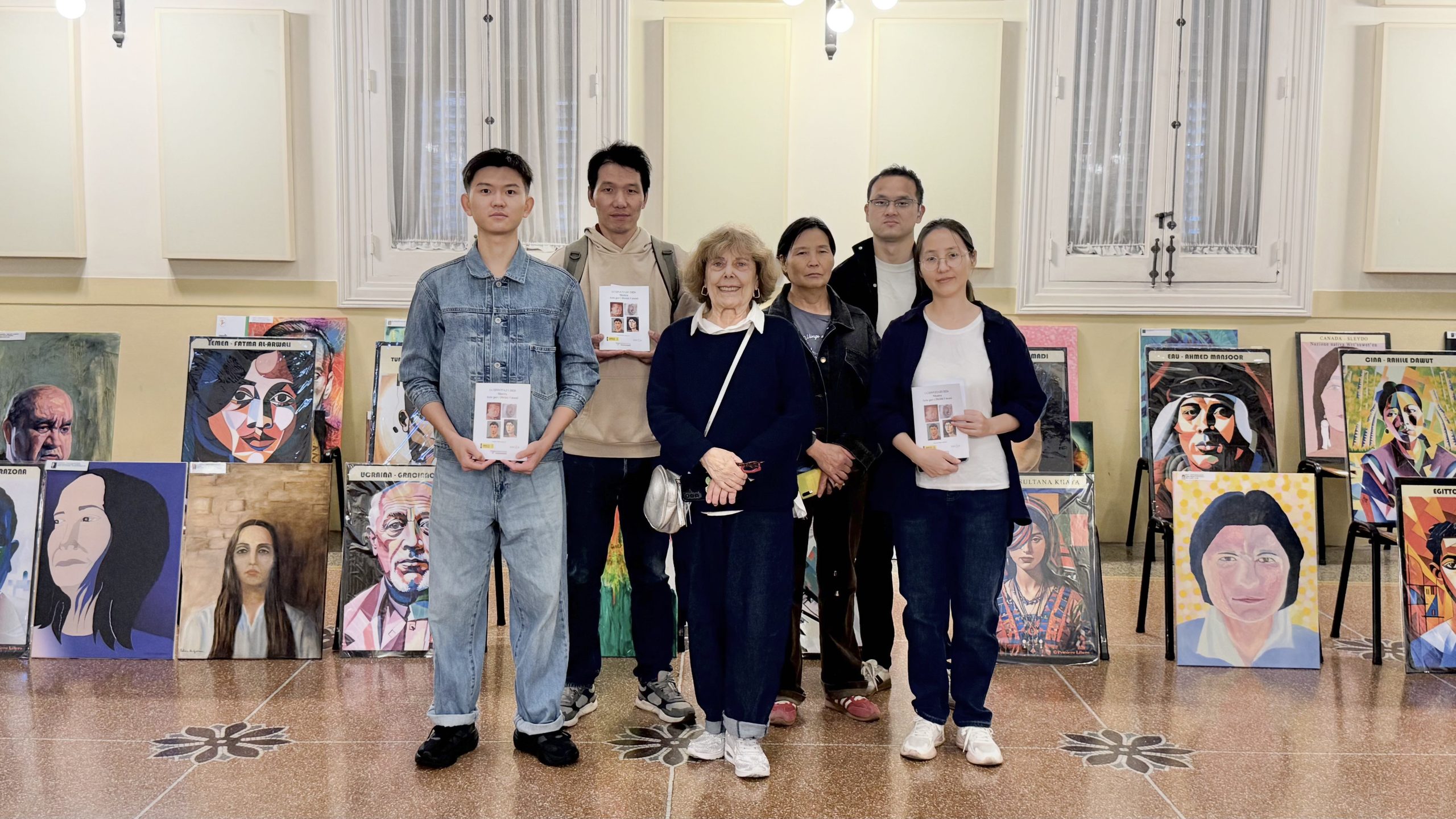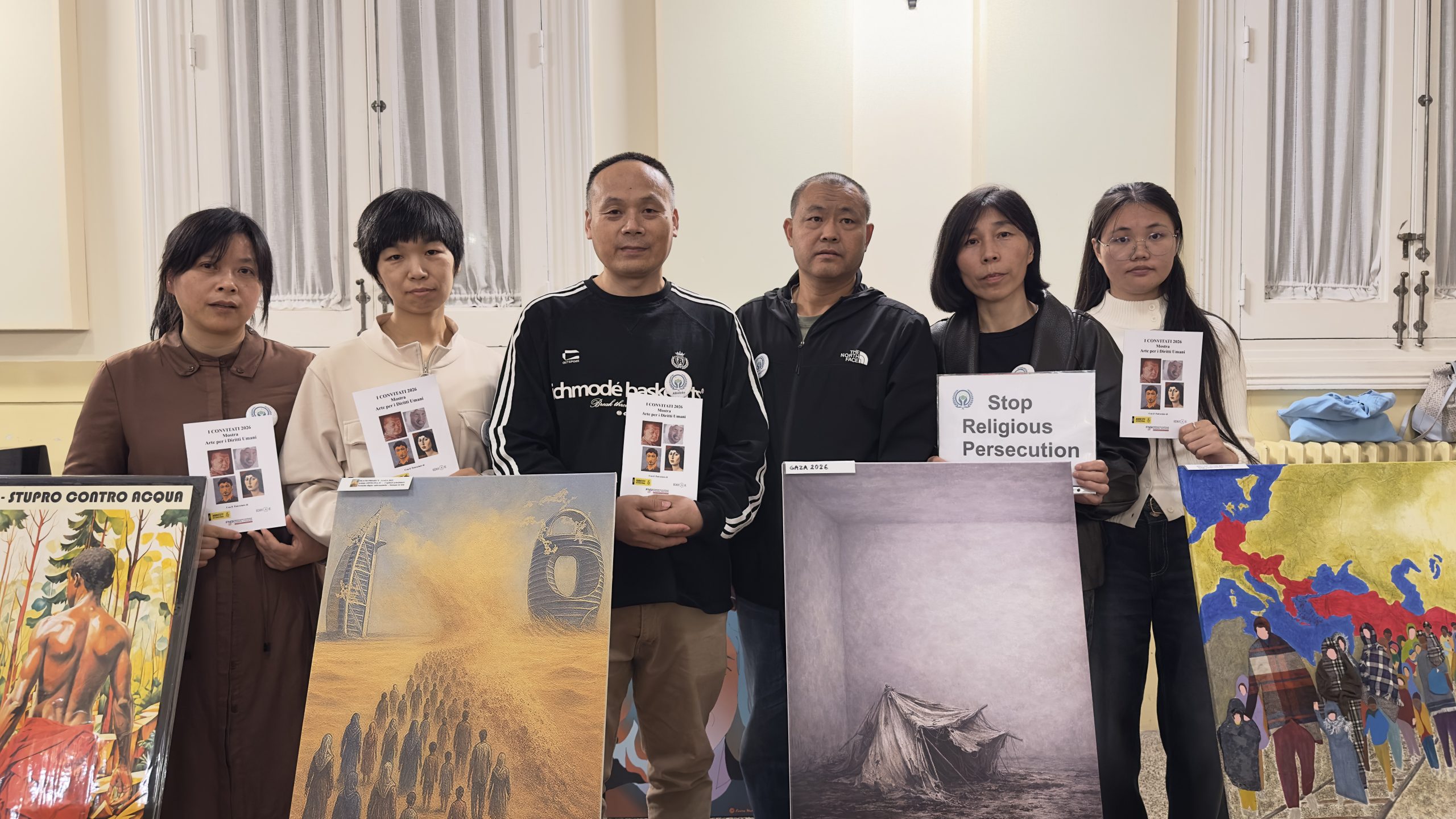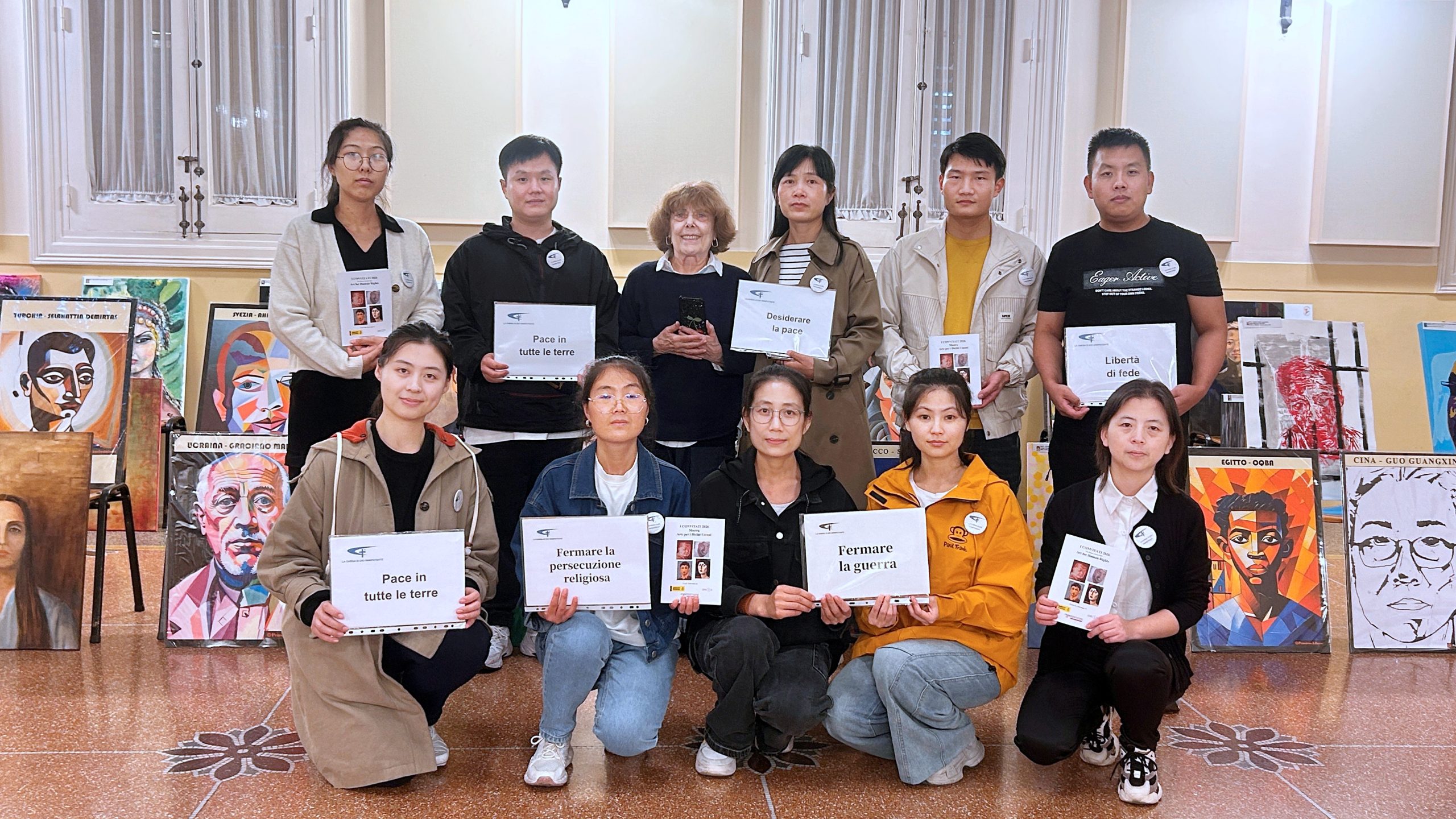
Rome, Italy — October 19–24, 2026 — The third edition of I Convitati 2026 – Arte per i Diritti Umani (Guests 2026 – Art for Human Rights) was held at the Waldensian Church in Piazza Cavour in Rome. Several Christians from The Church of Almighty God (CAG), along with Christians from Chinese house churches who had left China because of religious persecution, took part in this year’s event to raise awareness of human rights, freedom of belief, and the plight of people persecuted for remaining steadfast in their faith.
The exhibition featured 80 portraits created by 30 artists, focusing on people detained because of their beliefs, ideas, or social welfare initiatives. Among the works was a sketch depicting Luca (a pseudonym), a Christian from The Church of Almighty God. The portrait highlights the persecution Christians in China may face because of their religious beliefs.


The Story of Faith Behind a Sketch
The sketch was created by artist L. Carlodalatri. According to the case information provided by the exhibition, Luca was arrested during a religious gathering in 2002 and subsequently sentenced to three years of reeducation through labor on the charge of “disrupting public order.” During his detention, he was subjected to torture, sleep deprivation, and beatings. The persecution continued even after his release.
In 2015, Luca fled abroad to avoid being arrested again. According to the available information, he lived in Italy from 2024 through 2026 on a temporary residence permit. For asylum seekers who fear renewed religious persecution in China, deportation to the country may pose serious risks to their safety.
The portrait of Luca and the story behind it offer a glimpse into the persecution Christians in China may endure for remaining committed to their faith. For Christians from The Church of Almighty God and Christians from Chinese house churches at the exhibition who had left China because of religious persecution, the work also provides a window through which the international community can better understand their circumstances.

Exhibition Catalog Examines Human Rights in Xinjiang and the Plight of The Church of Almighty God’s Members
The exhibition catalog for I Convitati 2026 – Arte per i Diritti Umani includes an article titled “China — Crimes Against Humanity in Xinjiang,” which turns attention to the human rights situation in China’s Xinjiang region and the circumstances facing members of The Church of Almighty God.
Citing reports published by Amnesty International and the United Nations between 2021 and 2022, the article states that, since 2017, large numbers of members of Muslim ethnic minorities in Xinjiang have been held in so-called “reeducation camps.” It also describes efforts by the authorities to suppress the cultural and religious identities of groups including the Uyghurs.
The catalog also discusses The Church of Almighty God, describing it as an unrecognized Christian group. Citing a 2024 report published by the church, it lists more than 19,000 arrests, 2,000 prison sentences, and nearly 10,000 cases involving brutal torture or violent brainwashing.
In addition, the catalog cites relevant rulings of the European Court of Human Rights, noting that people deported to China may face a risk of inhuman or degrading treatment. It also states that the Chinese Communist Party (CCP) has taken action across national borders to track and suppress members of The Church of Almighty God who have fled overseas.
By bringing these issues into the exhibition catalog, the organizers seek to connect artistic expression with human rights concerns and encourage public discussion of religious freedom, the cultural rights of ethnic minorities, and the safety and protection of people living in exile.

Annual Report Documents Persecution of Christians From The Church of Almighty God
During the exhibition, religious freedom in China also emerged as a key issue. The Annual Report Exposing the CCP’s Persecution of The Church of Almighty God (2025) documents cases of Christians in China who were persecuted for participating in religious activities.
According to the report’s figures, at least 55,640 Christians from The Church of Almighty God were directly persecuted by the CCP in 2025 for engaging in ordinary religious activities. The report lists the following:
– At least 36,458 individuals were subjected to intimidation, threats, police summonses, home searches, or the forced collection of biometric data. Some were compelled to sign the “Three Statements” renouncing their faith: Statement of Guarantee, Statement of Repentance, and Statement of Severance. Others faced restrictions on their freedom of movement or were deprived of employment opportunities and social security benefits.
– At least 19,191 individuals were arrested, including 8,996 who experienced various forms of torture or violent brainwashing.
– At least 2,291 individuals were sentenced to prison.
– At least 23 Christians were persecuted to death.
Behind these figures are real believers and families whose lives have been affected. Luca’s experience and the cases documented in the report raise a fundamental question: How can people’s basic rights be protected when they face detention, abuse, violent brainwashing, or other restrictions because of their religious beliefs? For those who have escaped from China and are seeking a safe life in Europe, the ability to obtain protection, live freely, and practice their faith without fear is also a central concern in the broader discussion of religious freedom.
From Art to Public Awareness
On the afternoon of October 23, the organizers held a seminar titled “What Is the State of Human Rights in 2026?” as part of the exhibition. Participants included Antonio Staglianò, the Dean of the Pontifical Seminary; Paolo Naso, a professor of political science; Professor Pietro Poglieri, a member of the Italian Council for Religious Freedom and Dialogue; and journalist Costanza Spocci. The seminar was moderated by journalist Dino Martirano.


In his remarks, Antonio Staglianò spoke about how Jesus demonstrated selfless love for humanity through His crucifixion, brought hope to people, and taught them to love one another. He emphasized that love should be more than a slogan; it must be put into practice through concrete actions. His remarks also inspired people to reflect further on how to respect the dignity of every individual and treat others equally.

The exhibition was organized by I Convitati – Arte per i Diritti Umani, an Italian nonprofit cultural organization, with support from Amnesty International Italy and the Human Rights Institute of European Lawyers (IDHAE). Through its artworks and public discussions, the exhibition brought the experiences of people detained because of their beliefs into the public eye.
For the Chinese Christians who participated in the event, Luca’s portrait and the related human rights issues offered a way for the wider public to learn about the challenges surrounding religious freedom in China. When a portrait brings one person’s experience into view and a report documents thousands of individual cases, human rights become more than an abstract concept. They become a matter of lived reality, closely connected to each person’s faith, freedom, safety, and dignity.